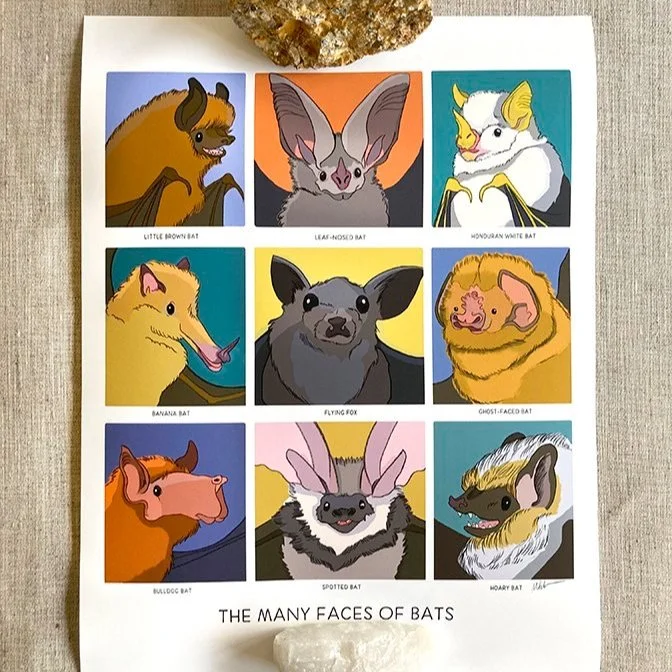
Molly Schafer's work offers a playful, yet enigmatic possibility for scientific and mythological conjecture. Her work's portrayal of female centaurs, hunters and warriors is a conflation of both scholarly feminist myth and pop culture, taking reference from both literary theory and Xena Warrior Princess.
Schafer writes, "My work explores gender and identity through fantasy, biology and historical re-writes." Her odd juxtaposition of fantastical, anatomical drawings of centaurs (human/animal combinations) with kitch decorative materials like faux Greek columns and ornaments creates an unusual entry point for a complex narrative. It's a sort of suburban-Parthenon-style narrative portal (through hobby craft and simulacrum) leading to a perverse, compelling and alternative fantasyland.
Schafer's recent interest in the female centaur was influenced by Dr. Misty G. Anderson's essay Lost Herstory: The Female Centaur and Other Suppressed Narrative. Anderson's research has an enigmatic proximity to myth. While her research legitimately uncovers a history, or "herstory", of female centaur suppression among past mythologists, Lost Herstory becomes a kind of myth in itself in its revelation of a lost figure that represents the empowerment of women. In this sense, Schafer's interest in Anderson's work is clearly a matter of conceptual mythmaking, blurring the limits of scholarly research into a visually ambiguous, awkward and intriguing critical fiction. Schafer's layered forms of narration include a hybridization that is most essentially and visually located in her female centaur drawings, which slyly shift between an imaginary and real psychological presence.
These centaur drawings play a prevalent role in her video Centaurides, shown on a small monitor placed atop a fake Greek column. In this work, Schafer supplements these odd, attractive, and at times repellent drawings with a story told by a computer-modified female voice that resides uncomfortably between the sexual awareness of a young woman and the voice of a slow child. In the beginning of the video, the deadpan and at times hilarious female narrator speaks about avoiding contact with a group of "asshole" guys dressed in "business casual". Yet then the voice strangely goes on to describe a vicarious desire to be a "little rabbit snuggled between brothers and sisters, underground in a nice warm burrow."
Is this merely a young woman longing for the physical and mental empowerment that this elusive female centaur represents? Or is this meant to be the voice of an authentic and contemporary (albeit confused) female centaur? Schafer lets the viewer construct their own interpretation, their own myth. In a body of work that balances research, experience and mythology, Schafer's work also courts the absurd transformation of that which is slightly untrue, campy and ironic, while revealing an awkward and real vulnerability at the same time.
Loading Artwork...
If you still see this message after several seconds:
- Enable Javascript
- Install the Adobe Flash plugin